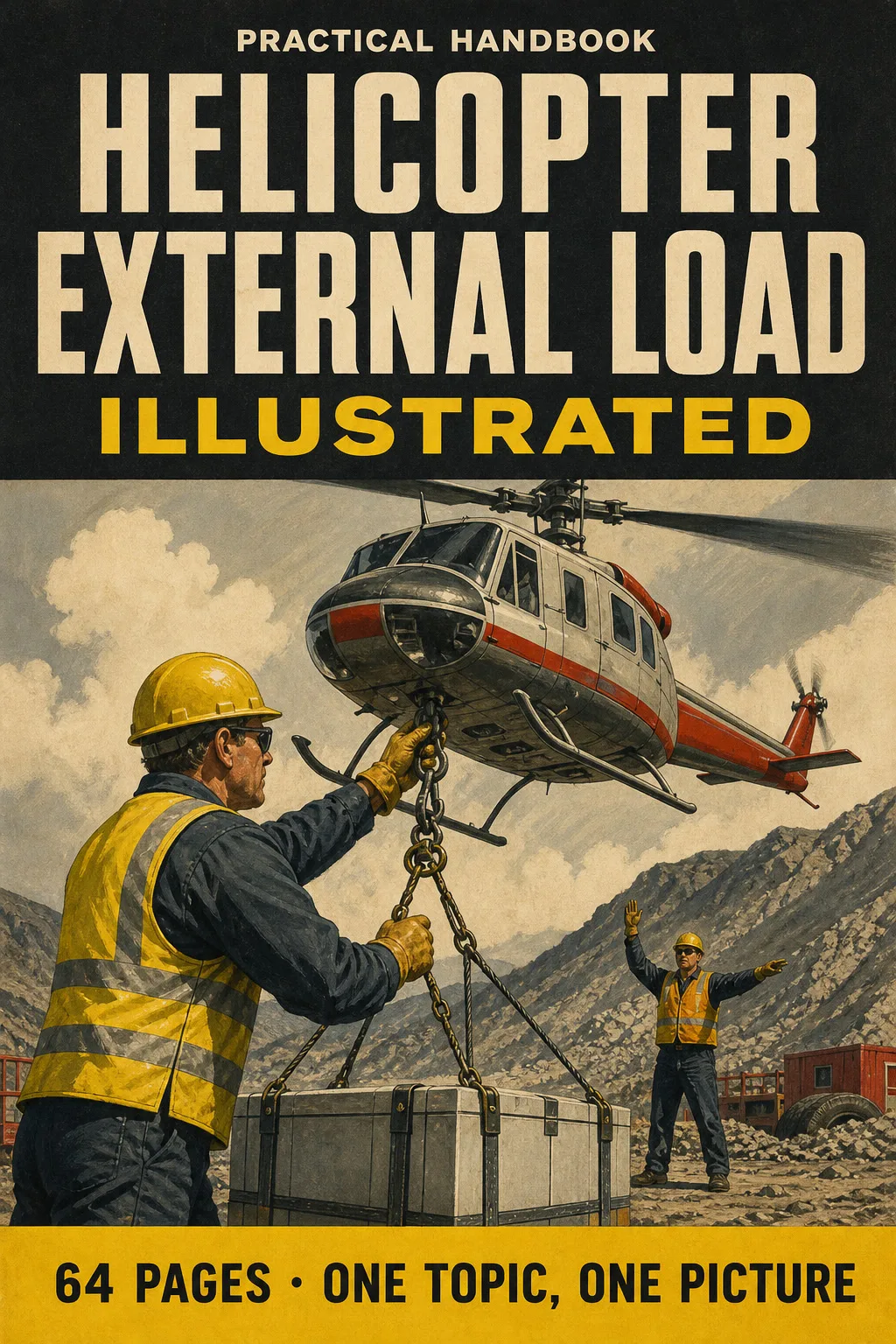
📄 Digital book in PDF · read it on your phone or print it
Load classes A to D, cargo hooks, long lines, slings and bridles, sling angle math, hand signals, HOGE and emergency jettison. One topic per page, drawn first, numbers in a box, so you can explain the hook or work out leg tension without going back to the regulation. 64 illustrated pages.
🔒 Secure checkout · PDF by email · 30-day guarantee
Every page has one big drawing and a box with the numbers, limits and steps you need to know:


Swipe to see more →
These are real pages from the book. The table of contents is the full one: 8 parts and 60 topics.
You're on the pad before the first lift and the check pilot points at the cargo hook: walk me through it, piece by piece, and tell me how it releases.
You know you read it. But the manual gives you the hook in paragraphs: load beam, keeper, solenoid, manual release, all in one block of text. Under the rotor, a paragraph doesn't turn into a picture.

In this book, the cargo hook is one page: exploded part by part, every piece labeled, the electric and the manual release drawn where they sit, and a box with the design factor: 2.5 × for cargo, 3.5 × for human external cargo.
The same goes for the four load classes, the long line, the sling angle factor, the pre-job briefing and HOGE: each one has its own page.
So you look at the hook, you know what every part does, and you explain it without going back to the manual.

Part 133 at a glance, load classes A to D, cargo hooks and long lines, slings and rigging, load math in 3 steps, ground crew and hand signals, flying the load, and review checklists: 64 pages, all illustrated.
Think of it this way:
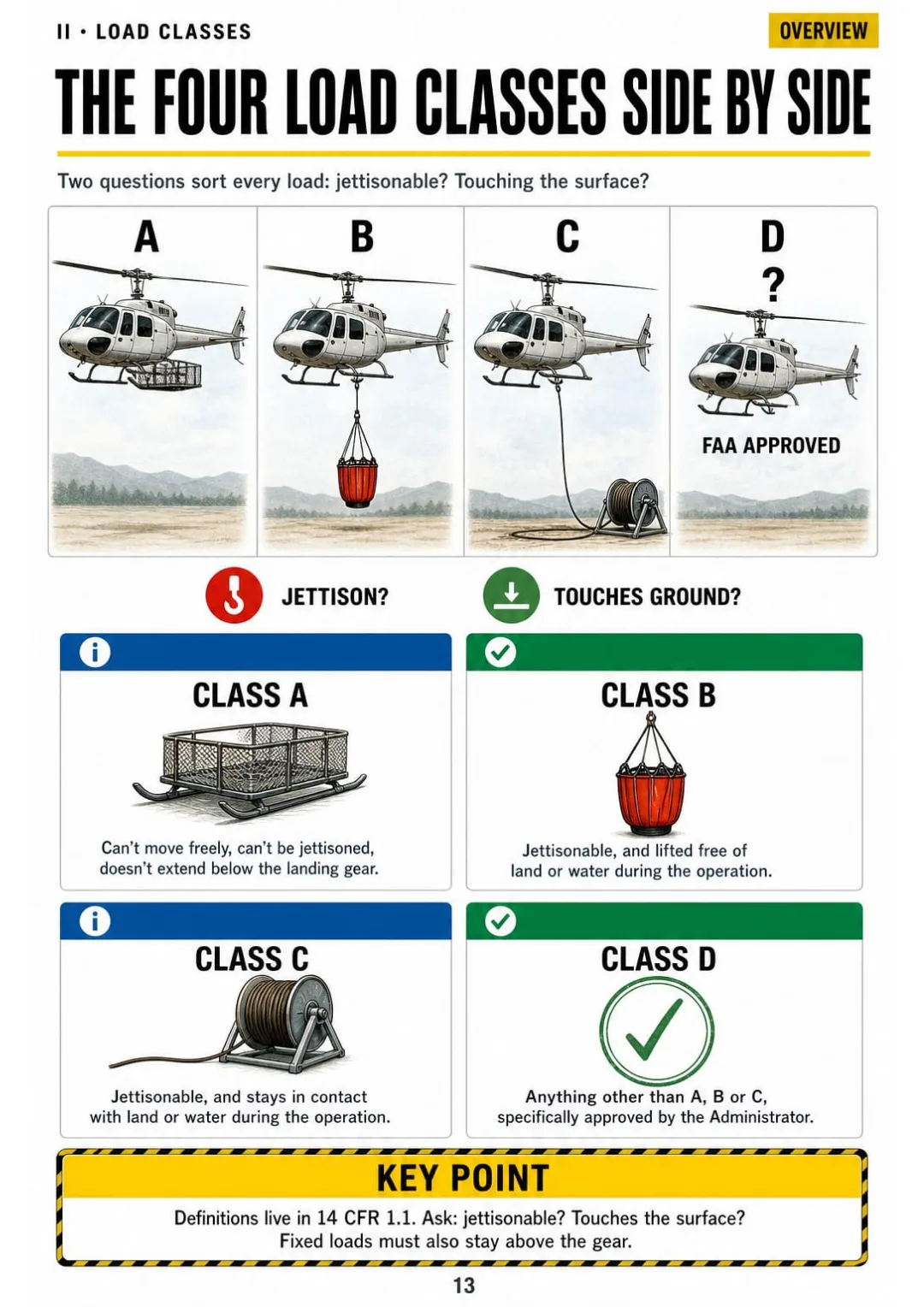
You're the designated pilot, the inspector is across the table, and he asks which class covers a load that stays in contact with the ground the whole time.
You've already opened the load classes page: A, B, C and D drawn side by side, the load fixed, lifted free, still touching the ground, and a box with the one detail that separates each class.

Same with the cargo hook, the sling angle factor, the pre-job briefing, the hand signals and HOGE: each one on its own page.
Helicopter External Load Illustrated is 8 parts and 60 topics, all drawn, and at the end you get one-page reviews plus the pilot and ground crew checklists.
What you see drawn, you don't have to memorize.
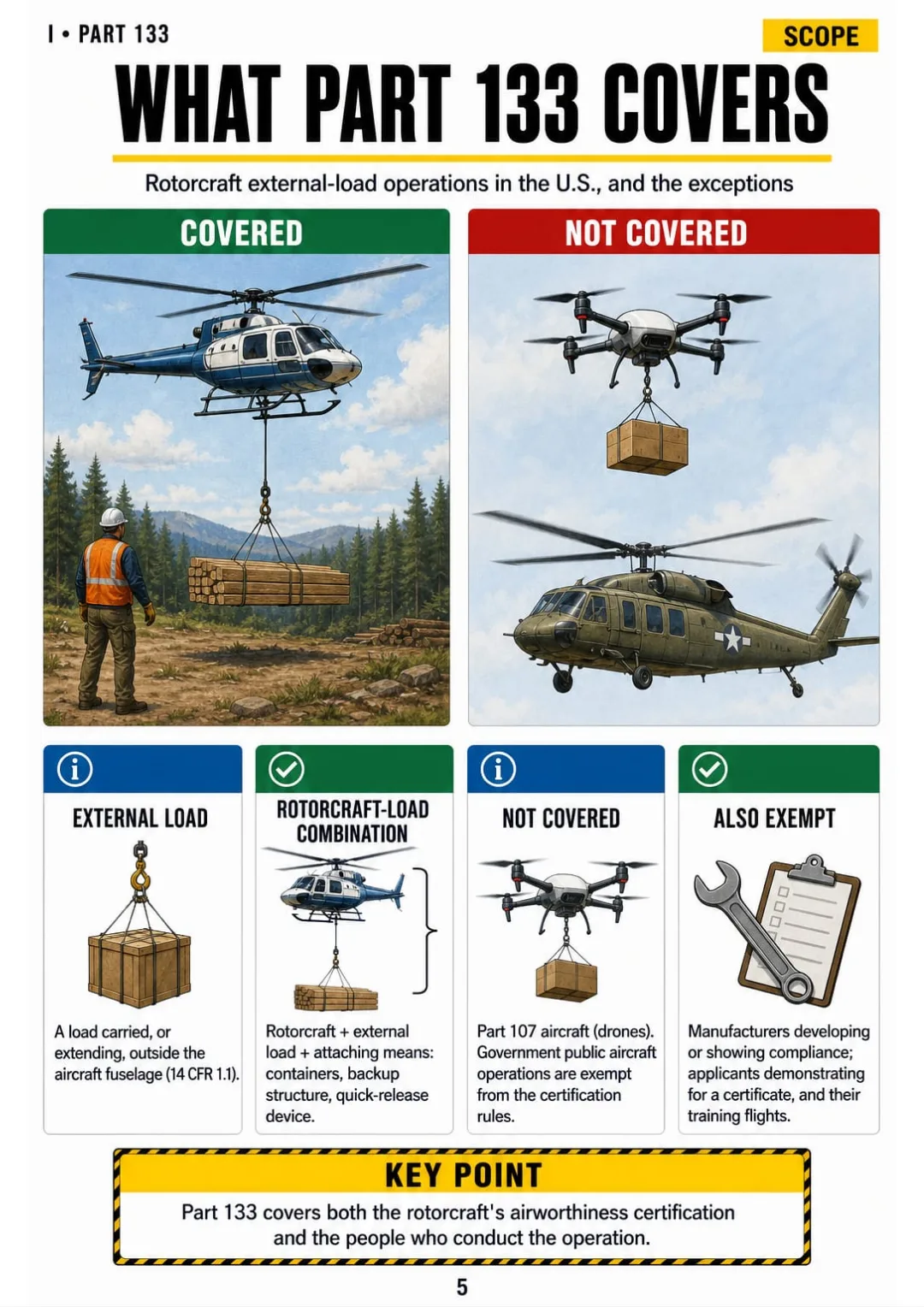
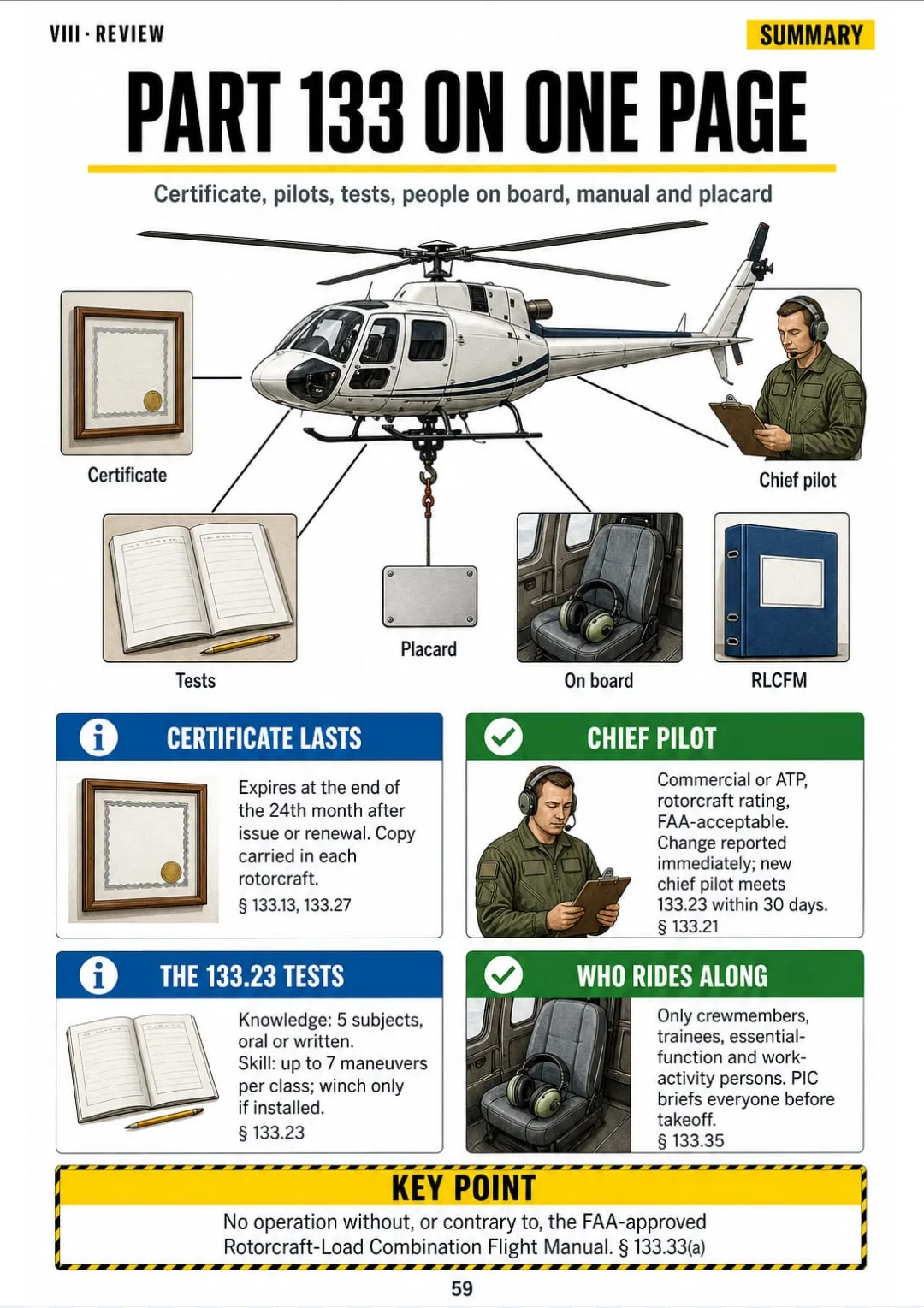
What Part 133 covers and what it doesn't, the operator certificate and how long it lasts, the chief pilot, the 133.23 knowledge and skill tests, who can be on board and the Rotorcraft-Load Combination Flight Manual.
The four classes side by side, Class A, B, C and D one by one, human external cargo, and the Class B vs Class C question.
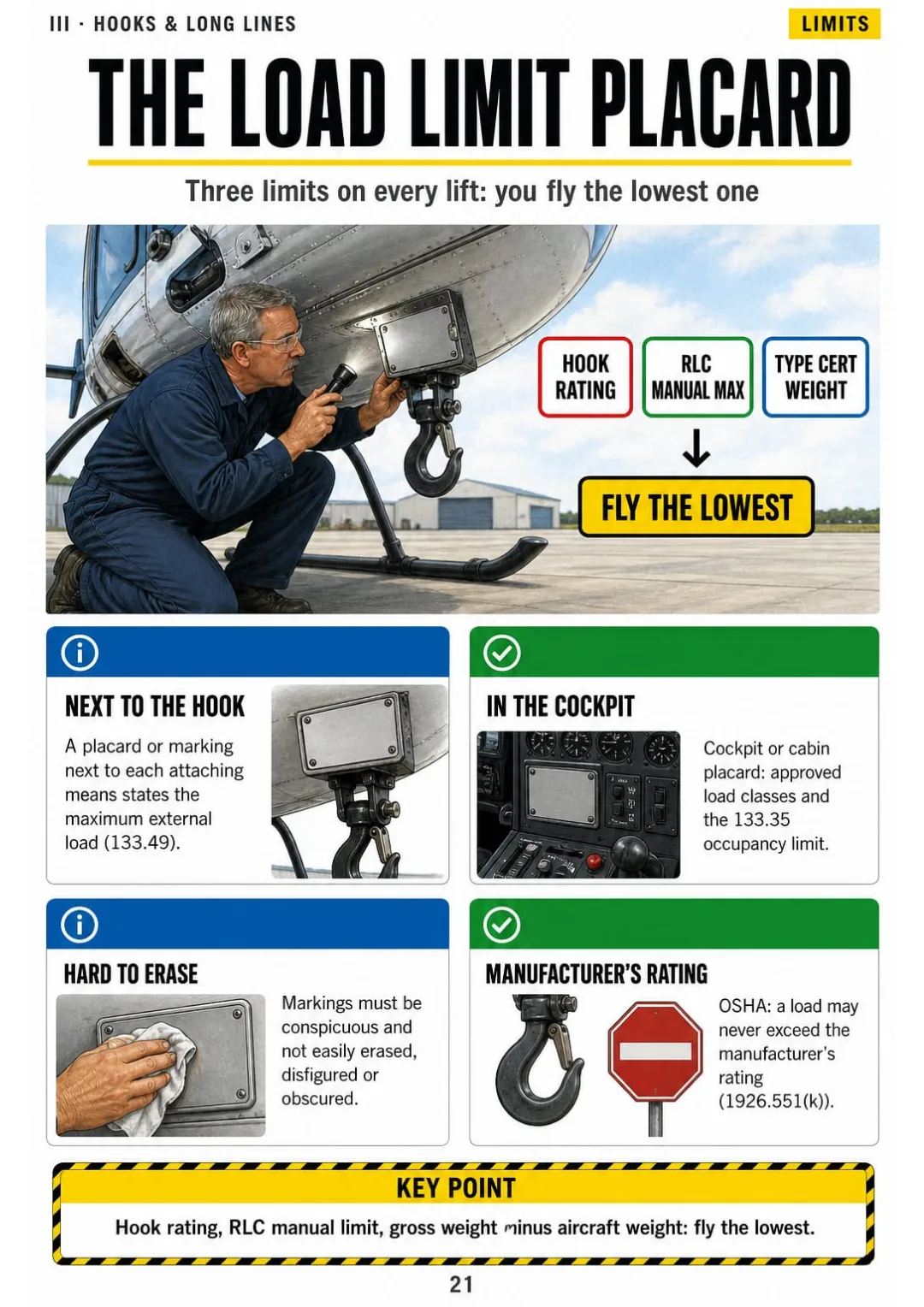
The cargo hook part by part, the three ways to release, the load limit placard, long line anatomy, short line vs long line, swivels and the hook and line preflight.
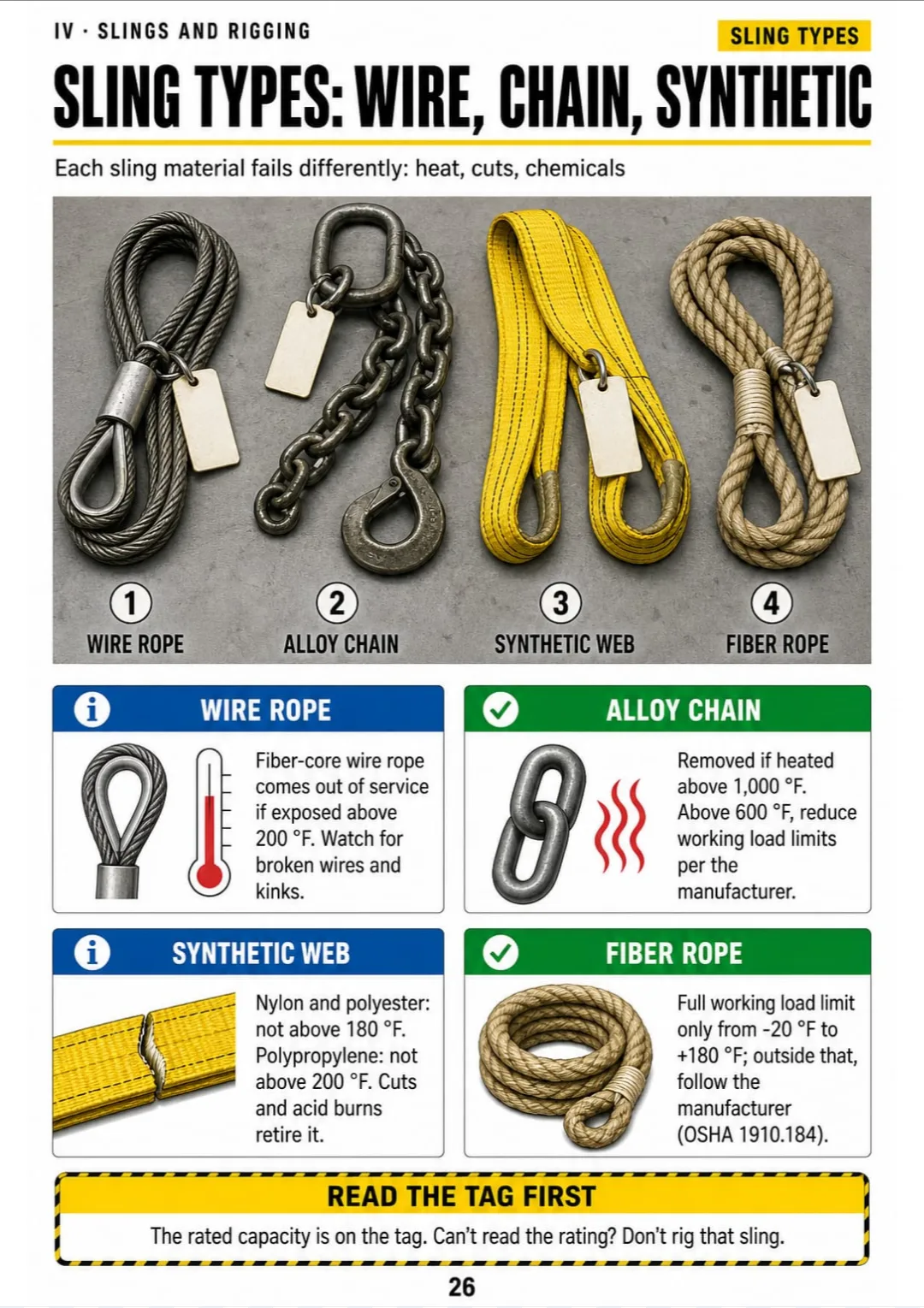
Wire rope, chain and synthetic slings, vertical, choker and basket hitches, 2-, 3- and 4-leg bridles, CG under the hook, hardware, nets and bags, light loads that fly, and removal criteria.
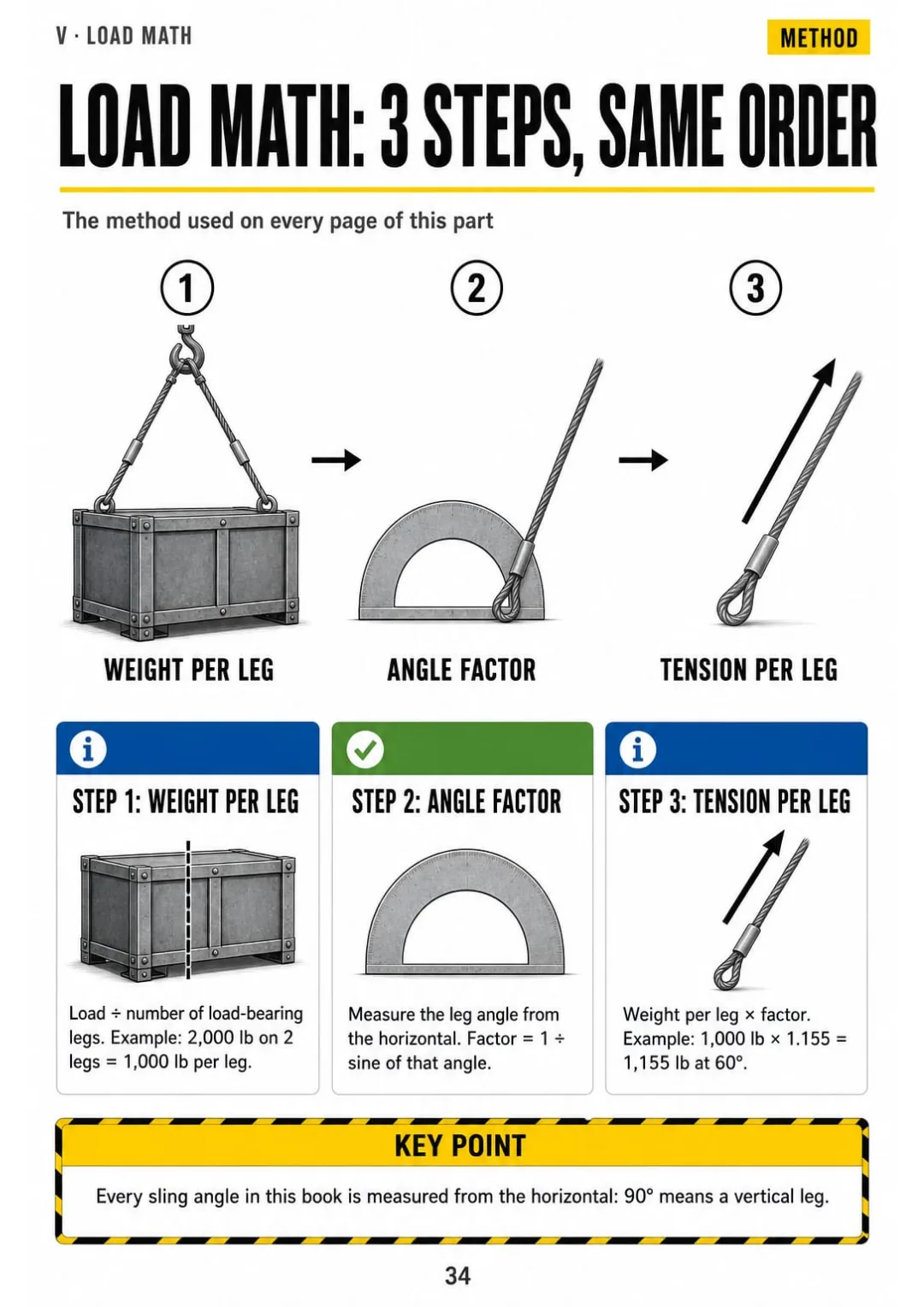
The same 3 steps every time: read the sling angle from the horizontal, apply the 90-60-45-30 factor, multiply. Worked examples in pounds, total weight on the hook and weight and balance, so you can check what each leg pulls before the load leaves the ground.
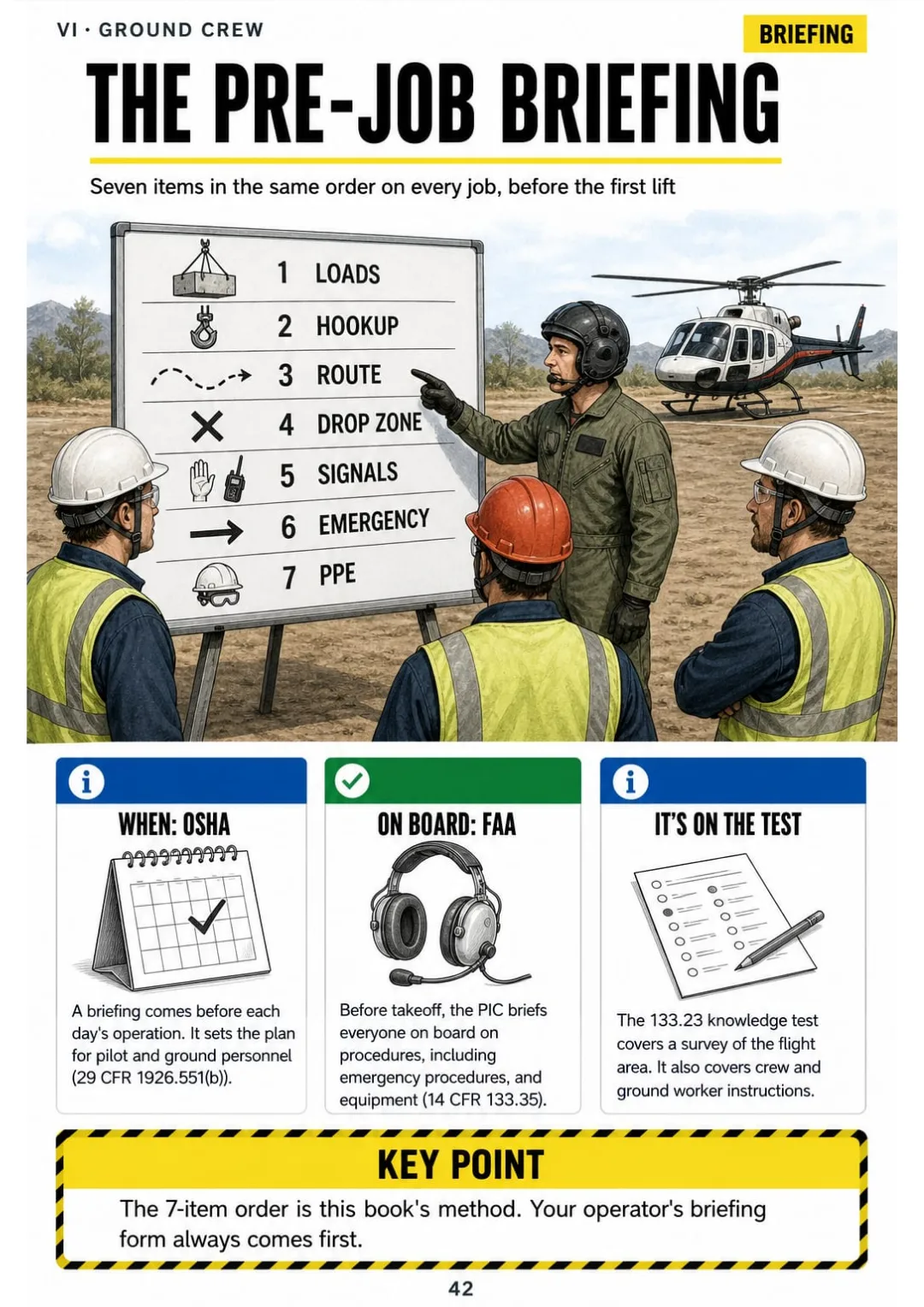
The pre-job briefing, grounding the hook, hookup and release step by step, hand signals for hover, move, up, down, hook, release, land and abort, radio calls and the safe zone.
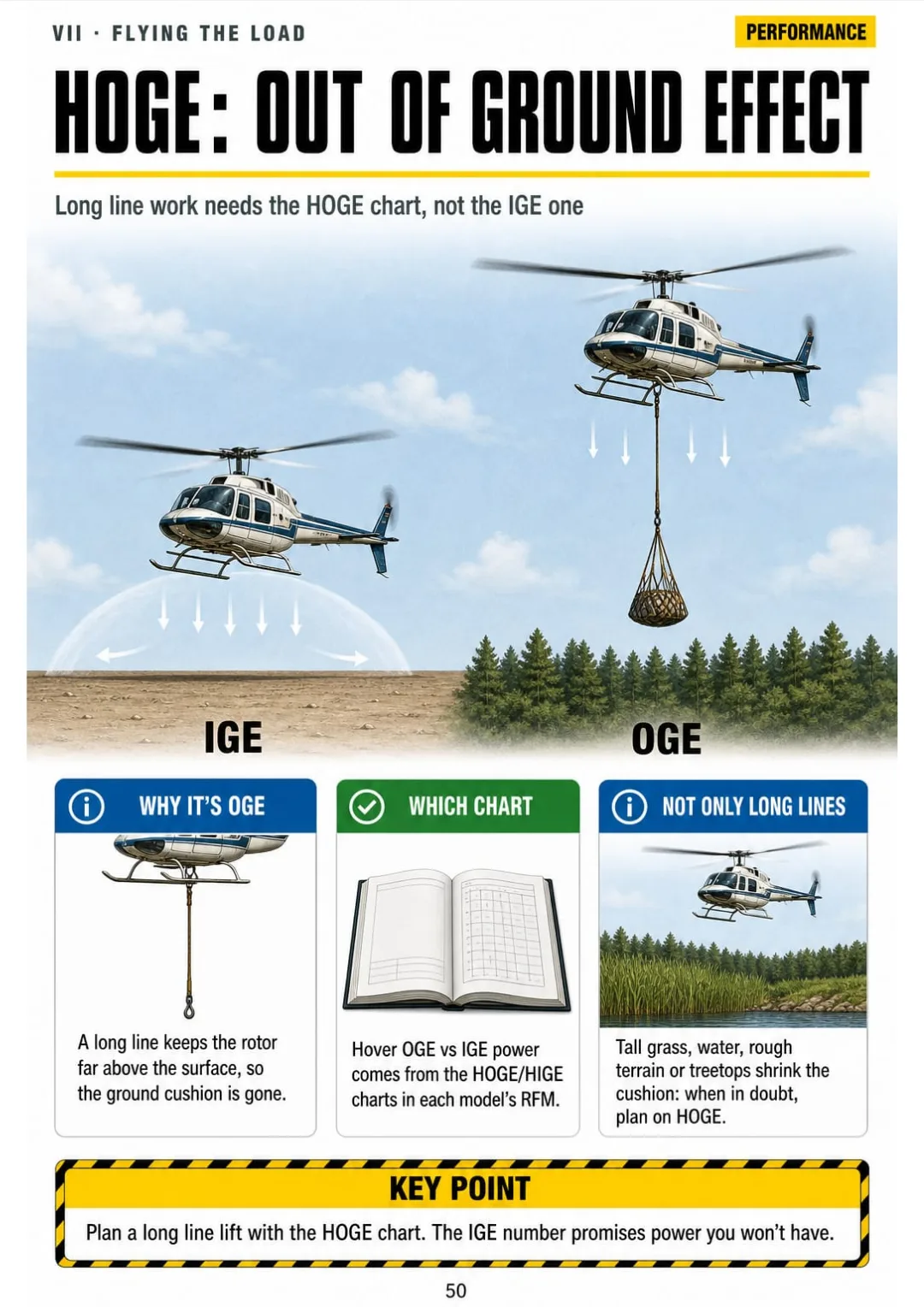
HOGE, density altitude, power margin, vertical reference, airspeed limits, pendulum and spin, Class C snags and dynamic rollover, emergency jettison and engine failure with a load.
Part 133 on one page, load classes and load math on one page, pilot and ground crew checklists, key questions to review and frequent hookup and rigging mistakes, so the night before a check you go through it all in minutes of reading, not hours.
At the end of the book: One-page reviews of Part 133 and load math, pilot and ground crew checklists, and the key questions to review before your check.
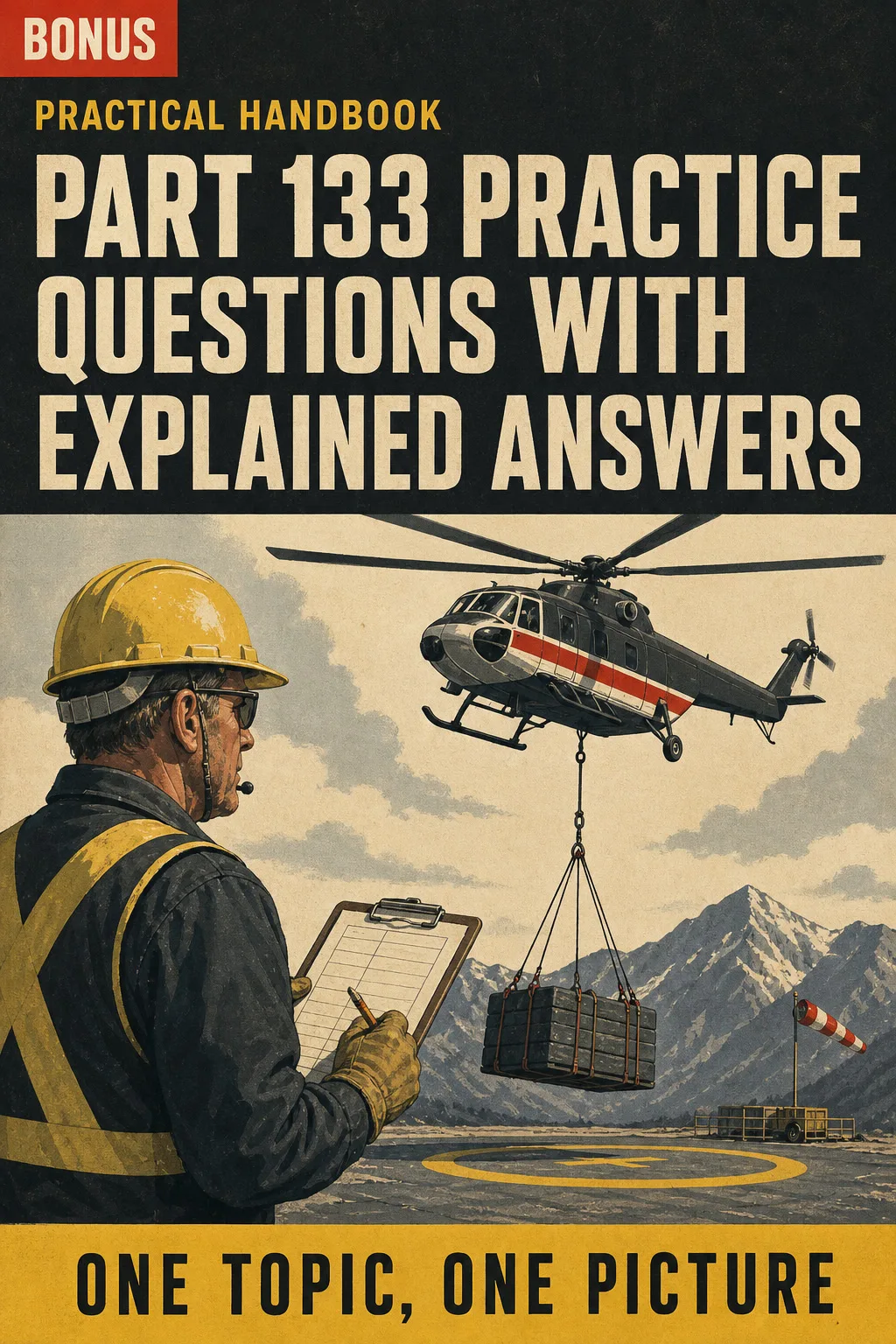
Test yourself on load classes, operator rules, load math and emergencies, and see why each answer is right before you sit down with the inspector.

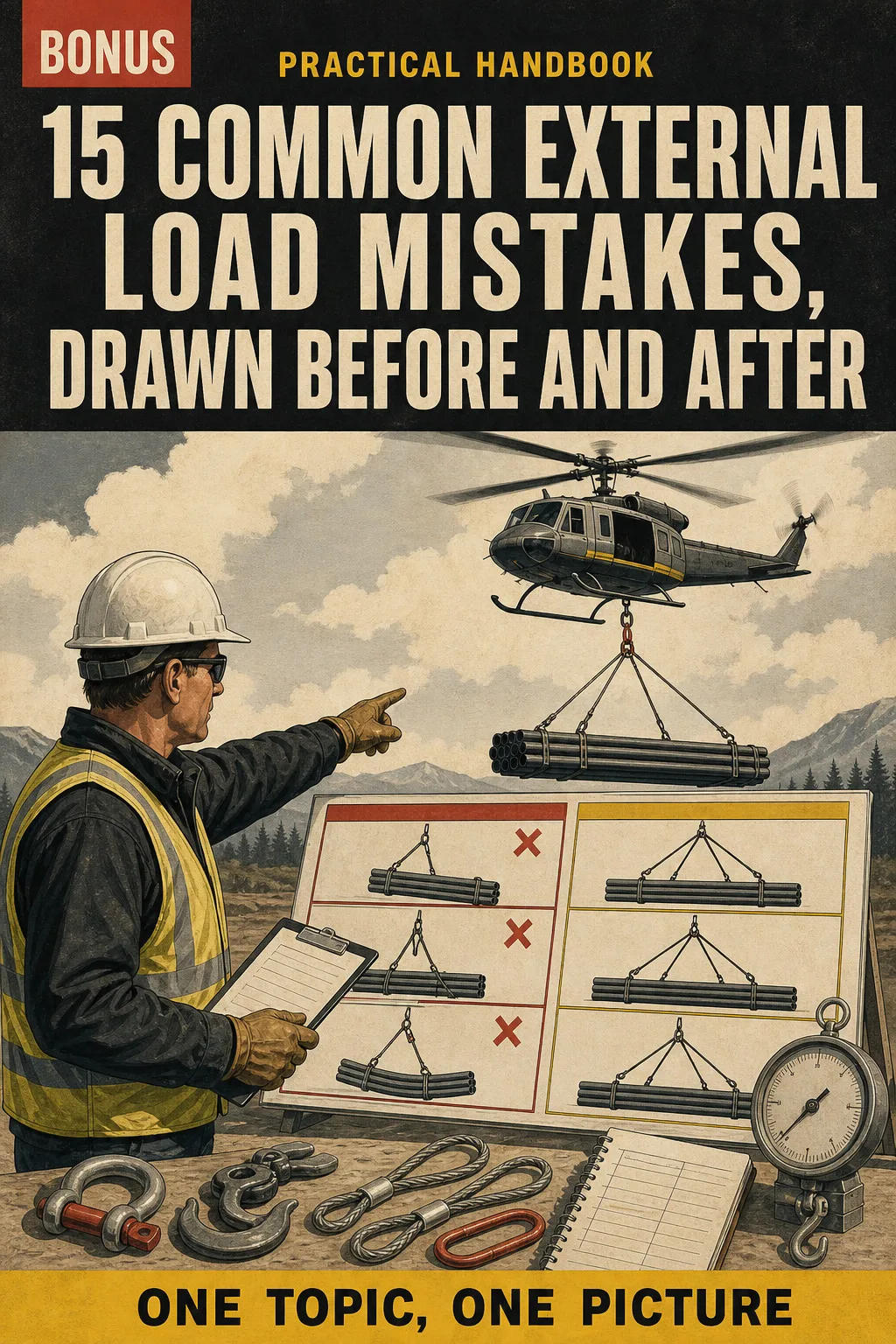
See the rigging, hookup and setdown errors made most often on the job, each one drawn wrong and then right, so you catch them on your next lift.
📄 This is a digital PDF book sent to your email: nothing is printed or shipped.
PDF by email: We email you Helicopter External Load Illustrated as a PDF, together with the two free books. It's a single payment: no installments, no extra charges.
You already fly, and now it's construction, power lines or fire season. Every external load topic is on its own page, drawn, so you learn it in order.
Load classes, operator rules, load math and emergencies, in the order of the 133.23 knowledge subjects. The practice questions let you check yourself before you sit down with the inspector.
Hookup, hand signals, sling angles and HOGE, one page each, to review before the season or before a new kind of lift. Print it and keep it in the truck.
📄 This is a digital PDF book sent to your email: nothing is printed or shipped.
Try Helicopter External Load Illustrated for 30 days, bonus books included.
We refund everything if the file won't open, if the book isn't what you see here, if you were charged twice or if the email doesn't arrive. Just email us.
You pay once. No subscriptions.
Yes. It doesn't teach you to fly a helicopter and it doesn't start from zero: it assumes you already fly or work the pad, and puts the external load work in order, from load classes to load math, hand signals and emergencies, one page each. It also works for ground crew.
It's built from the current text of 14 CFR Part 133 and the 14 CFR 1.1 definitions, cross-checked with FAA AC 133-1B, the FAA Helicopter Flying Handbook and, for ground crew, OSHA 29 CFR 1926.551. It isn't a summary copied from the internet: every topic comes from those sources.
No. It's independent study material. It isn't published, endorsed or approved by the FAA or any operator, it doesn't give you a certificate and it doesn't count as approved training.
No. It doesn't replace the operator's approved training, the Rotorcraft-Load Combination Flight Manual, your aircraft's RFM or the inspector's instructions. It helps you study and review them.
No. They were written for this book to help you check what you know. They aren't official questions from any FAA test.
The book and the 2 bonus books come as PDFs by email, to the address you enter at checkout.
No. It's a one-time payment. No subscription.
Yes. The PDF is made to print, so you can keep it in the hangar or the truck.
You have 30 days. We refund everything if the file won't open, if the book isn't what you see on this page, if you were charged twice or if the email doesn't arrive: just email us.
No more rereading the regulation with nothing sticking.
The cargo hook and the four load classes: you see them drawn, and it clicks.
You walk into the test, or onto the pad, knowing where everything is.
Drawings make studying faster.
The book is right below.
One-time payment: US$ 27 · Guarantee: 30 days · PDF by email
YES, I WANT HELICOPTER EXTERNAL LOAD ILLUSTRATED FOR US$ 27📄 This is a digital PDF book sent to your email: nothing is printed or shipped.